Why Do We Kiss Under the Mistletoe at Christmas? Here’s the truth!
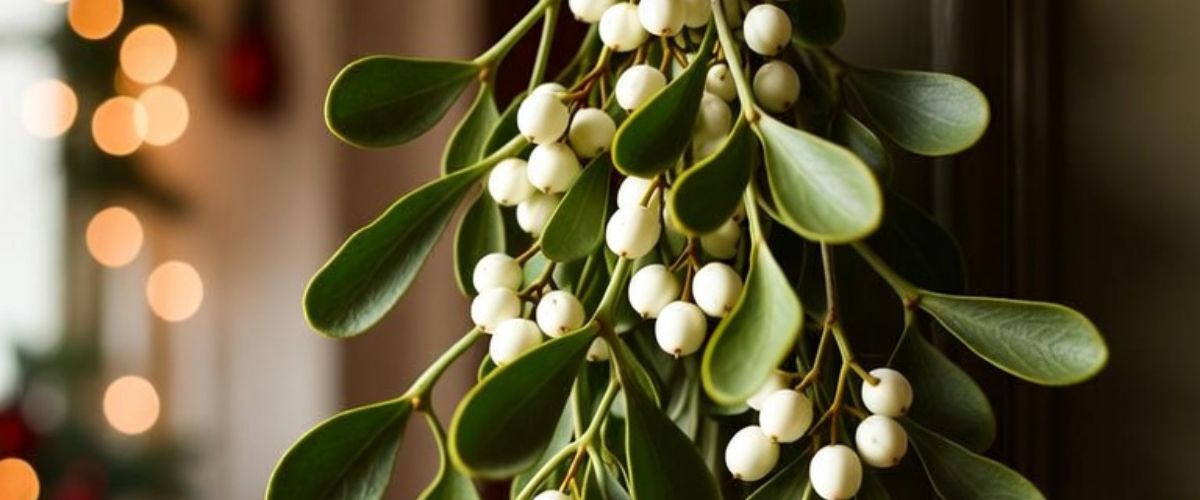
Why do we kiss under the mistletoe at Christmas? It’s the one festive tradition we all happily go along with every December – but where does it come from?
Turns out the answer is far more entertaining than you’d expect.
From sacred druid rituals to a rather cheeky 18th-century servants’ game and even a starring role in a Charles Dickens Christmas party – mistletoe has been getting people to pucker up for centuries, and the story behind it is brilliant.
Where Does The Tradition Of Kissing Under The Mistletoe Come From?
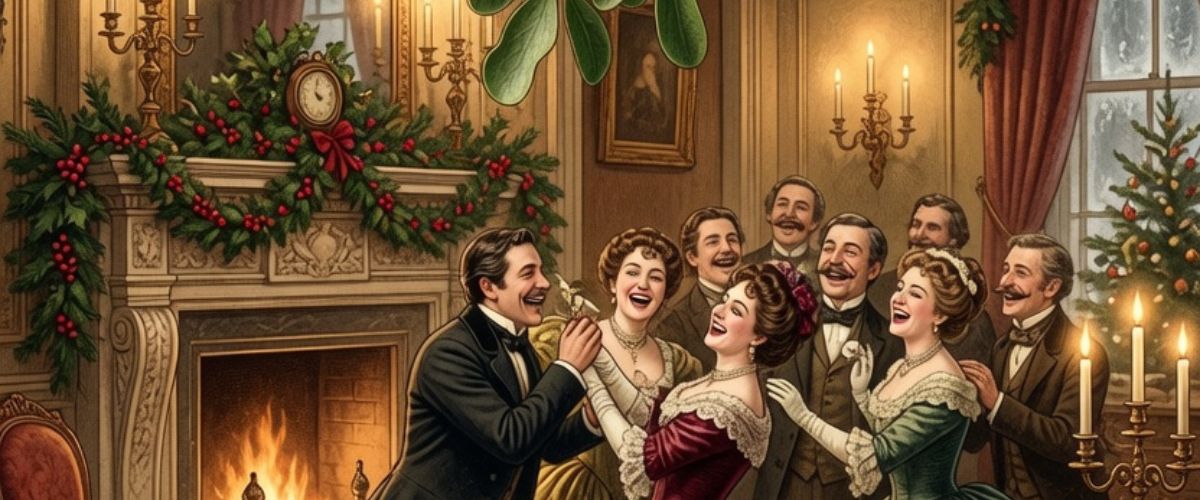
The earliest documented version of kissing under the mistletoe dates to England between 1720 and 1784, according to historian Mark Forsyth, and appears to have begun among servants before gradually spreading to the rest of society.
By the end of the 18th century, hanging mistletoe at Christmas had become genuinely fashionable across England, with anyone caught standing beneath a sprig considered fair game for a festive kiss.
The Norse Myth Everyone Gets Wrong
You will often hear that the tradition traces back to Norse mythology and the god Baldur, whose death involved mistletoe, and that his mother, Frigg, supposedly declared the plant a symbol of love afterwards.
However, historian Mark Forsyth, who examined four separate Norse accounts of the story, found no genuine connection to kissing at all.
The Baldur myth is a beautiful piece of mythology, but almost certainly not where our modern Christmas tradition actually began.
🔗 Shop A Christmas Cornucopia by Mark Forsyth at Amazon UK
The Victorian Christmas Party Tradition
Mistletoe truly came into its own as a Christmas tradition during the Victorian era, immortalised by Charles Dickens in his 1837 novel The Pickwick Papers.
This describes a wonderfully chaotic Christmas party scene of shrieking, laughing guests caught beneath the mistletoe.
One particular rule of the era involved counting the berries; a gentleman was permitted only as many kisses as there were berries left on the sprig.
Why Mistletoe Specifically?
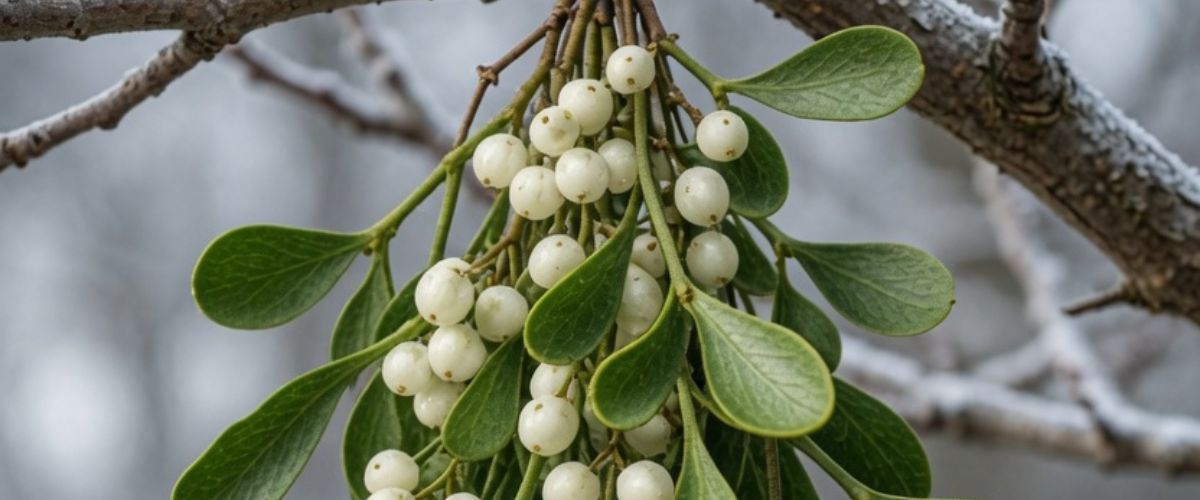
Mistletoe has held a special place in midwinter celebrations for thousands of years.
Unlike almost every other plant, it stays vividly green and even bears fruit in the depths of winter.
Celtic druids considered mistletoe a sacred plant since the first century, treasuring it as a powerful symbol of vitality and fertility.
👉 Curious about more Christmas plant traditions? Head to our A Robin’s Not Just For Christmas for more fascinating festive nature facts!
So next time someone pulls you under a sprig of mistletoe this Christmas, you will know exactly why.
Pucker up and enjoy the history behind the moment.
🎄 Christmas Countdown 🎄
The magic of Christmas is just around the corner!



Related Reads

How To Choose The Perfect Christmas Playset – The Complete Buying Guide 2026
Everything you need to know!...
Read More →
John Lewis Top Toys For Christmas 2026: The Full List Is Here
These are what children will ask Santa for...
Read More →

When Do The Christmas Shops Open? Harrods, Selfridges, John Lewis & More
The FULL Breakdown...
Read More →